
For the past ten years, the award has been associated with glass. However, this new phase of the competition returns to a traditional Czech material with a long history of production. The award is produced by Thun 1794 a.s., the oldest Czech porcelain manufacturer, based in Nová Role near Karlovy Vary.
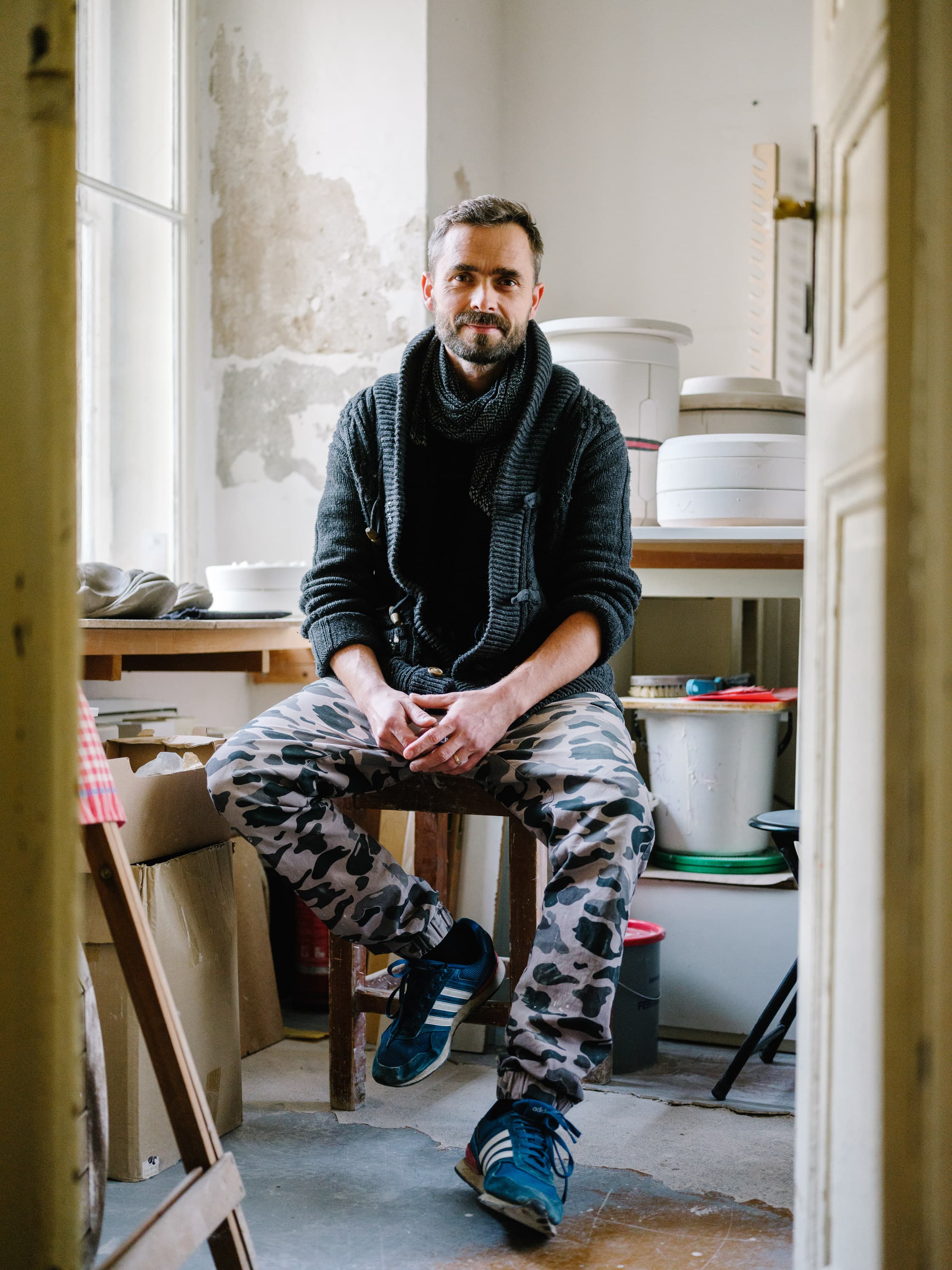
The designer is Antonín Tomášek
Antonín Tomášek is one of the leading figures in Czech product design, particularly in the field of ceramics and porcelain. He heads the ceramics design studio at the Faculty of Art and Design at UJEP in Ústí nad Labem, where he serves as an associate professor in the field of visual communication. He graduated from the Academy of Arts, Architecture and Design in Prague.
His work has long been based on combining traditional craftsmanship with innovative methods and contemporary technologies. Antonín Tomášek’s works are represented in national galleries and private collections and regularly appear in professional contexts of Czech and international design.
Porcelain as a New Symbol of the Competition
The involvement of Thun 1794 a.s. builds on the historical continuity of Czech porcelain production. The company was founded in 1794 and is today the largest domestic manufacturer of porcelain. The choice of material is thus not merely an aesthetic decision, but also a conscious reference to the tradition and quality of Czech production.
Award Ceremony at Living Forum
The award will be presented, as is tradition, at the conclusion of Living Forum, the international congress on housing, design, and architecture, which takes place at the DOX Center for Contemporary Art in Prague.
Over the course of its ten-year history, Living Forum has established itself as a major platform connecting architects, interior designers, developers, and investors from across Europe. Dozens of international figures have taken the stage there, including laureates of the Mies van der Rohe Award and other prestigious architectural awards.
For the real estate and development sectors, “Interior of the Year” has long been an important indicator of the quality of completed projects. It evaluates not only the aesthetic quality of projects but also their functionality, sustainability, and ability to respond to users’ current needs—parameters that have a direct impact on a property’s value and market position.