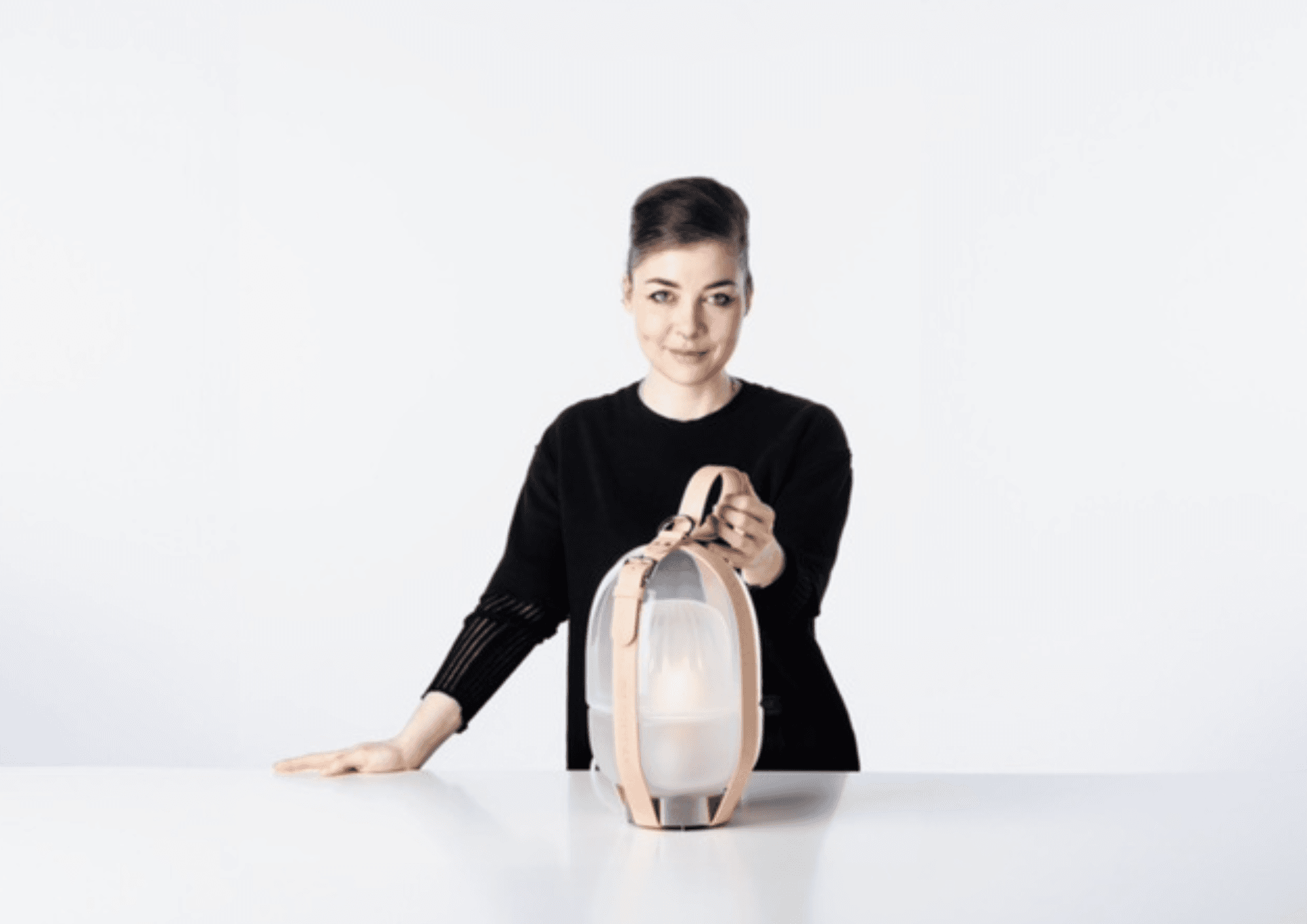
Kateřina Handlová with the prize for the overall winner of the ninth Interiér roku competition. Photo: Kristina Hrabětová.
You come from a region known for glassmaking and from a family of glassmakers. Did you ever want to break free from their influence, or was it always clear that you would work with glass?
My parents steered me towards glass from a very young age, and it was my dad’s great wish that I should carry on the tradition of glass art. I didn’t resist it, but before I started at the Academy of Arts, Architecture and Design, there was a brief moment when I considered studying chemistry. In the end, I opted for glass, and I have no regrets about it today.
You studied at the Academy of Arts, Architecture and Design in Prague in Rony Plesl’s studio. Afterwards, you also took over the role of artistic director at the Rückl glassworks. Do you try to go against his influence, or are you following in his footsteps?
When I joined the Rückl glassworks, it was clear to me that I should build on the visual language that Rony had established there, but at the same time I had to infuse it with my own personality and style, and find a new approach to cut glass. I’m from a different generation, and a woman to boot, so I wanted to infuse a certain delicacy and feminine element into the work and bring fresh inspiration. That said, I do like the direction and visual style that Rony established at the glassworks.
In your work, you draw heavily on sexuality and various underground movements. How did you get into this world, and what fascinates you so much about it?
The turning point came whilst I was still at university, when Rony Plesl brought a book to a tutorial about the exhibition *Fetishism in Fashion*, which was taking place in the Netherlands at the time. It explored various types of fetishes and how they are reflected in fashion. I was absolutely captivated by it. I started to wonder why something so integral to fashion couldn’t be translated into product design. After all, sexuality is something we all share and are familiar with, and it’s perfectly natural to express it.
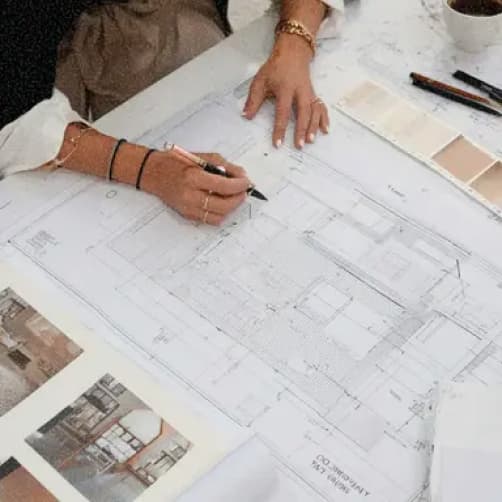
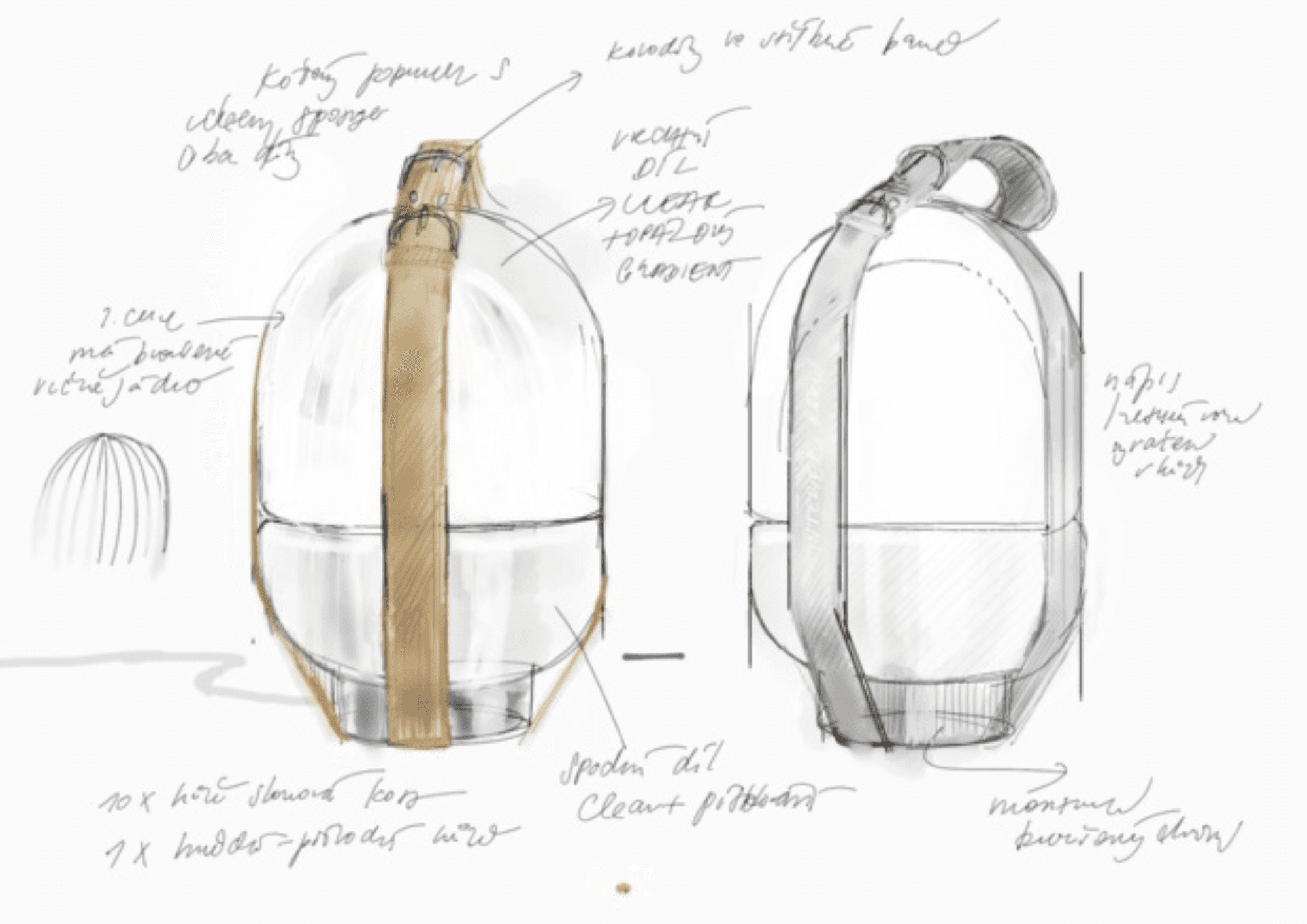 Sketch for the award for the overall winner of this year’s Interior of the Year. Photo: Kristina Hrabětová.
You often mention that fashion inspires you. In your first collection for the Rückl glassworks, entitled ‘Heroin’ (heroines), you dedicated a vase to Vivienne Westwood and Coco Chanel, for example. Why are these women heroines to you?
Every vase in this collection is inspired by a woman who has lived a powerful life story and inspired me not only through her work but also through her courage. As well as the names mentioned, one vase is also inspired by Rei Kawakubo, who founded the Comme des Garçons brand. With Vivienne Westwood, for example, I was struck by her inspiration from underground cultures, specifically punk; she created raw, deconstructive street fashion, yet her designs also drew on historical styles. I’m drawn to working with leather; I like harnesses and collars. Westwood, for example, said that people perceive them as something that restricts you, but in reality they liberate you mentally. The Coco vase, on the other hand, is directly inspired by the diamond stitch originally used on a handbag, which was the first to feature a leather strap and thus freed women’s hands. So there’s an element of freedom there.
Would you like to become a fashion designer in the future as well?
I enjoy fashion and would love to create my own collection one day, but it would be more in the realm of fashion accessories.
You once said that you’re fascinated by the human psyche and that you observe how people react to your designs. What emotions are you trying to evoke with your designs?
I suppose what I want most is for people to touch my designs and to enjoy the curiosity and sensuality that a particular material offers. Whether they ‘simply’ like them or are even, in their own way, excited by them. I like it when you come into close contact with an object – be it a vase, a glass or a lamp – and discover its character through touch, or when you simply can’t help yourself and have to find out what it’s like to touch it.
I know you like to take risks and turn established attitudes and practices on their head. How does that manifest itself?
I’ve been working with glass all my life, so I sometimes feel it tempts us to focus primarily on its beauty, lustre or the way it refracts light, but I look for contrasts in it above all else. I like the contrast between matt and gloss, or when the cut doesn’t merely decorate the glass but actually shapes it. Perhaps this also reflects my love of fashion, because, for example, the famous designer Alexander McQueen once said, ‘You’ll never move forward if you play it safe’. I’ve lived by that my whole life.
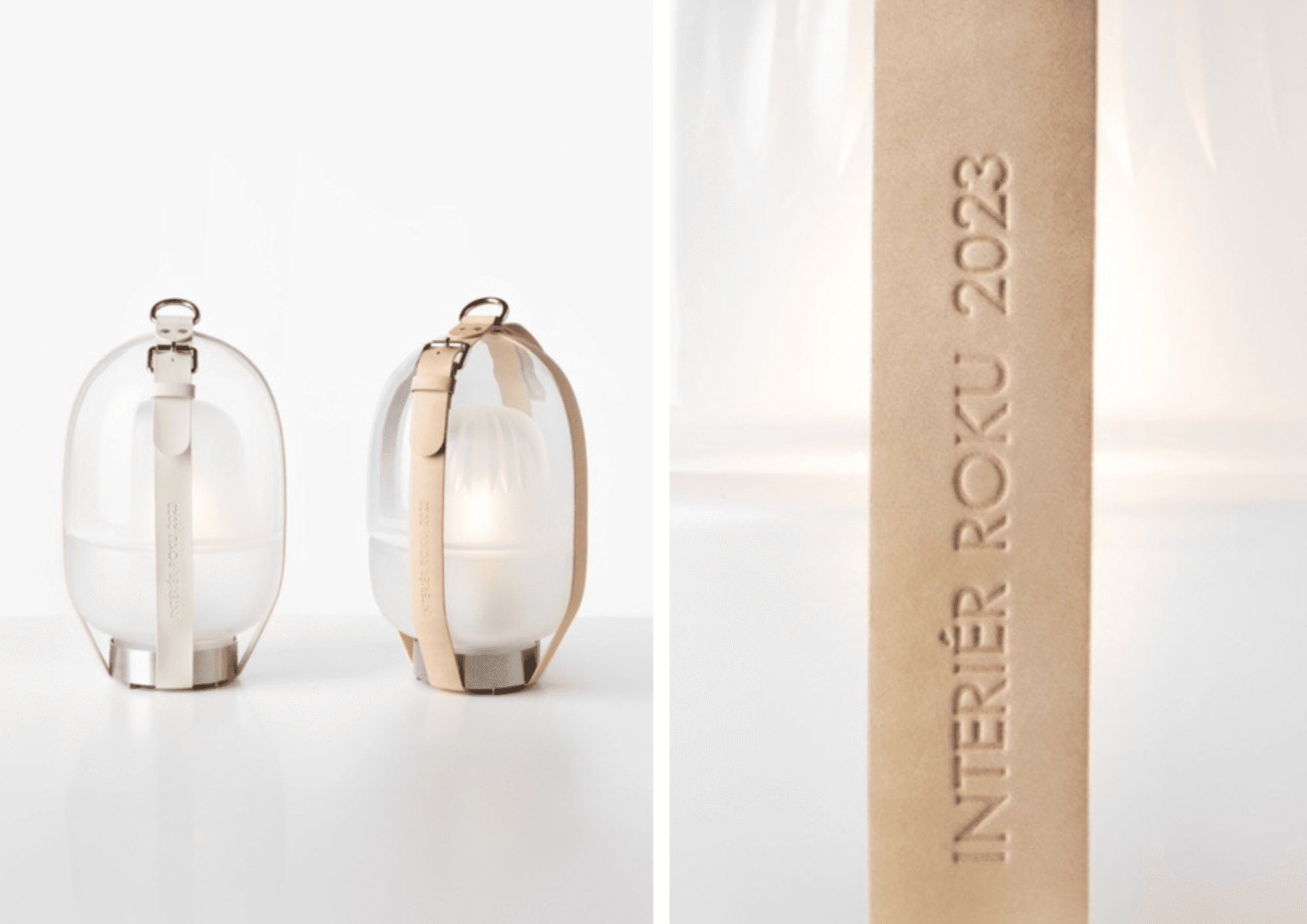 The award for the overall winner of Interior of the Year. Photo: Kristina Hrabětová.
You worked at Lasvit in Dubai for four years. What is the difference between the artistic environment in the Czech Republic and the UAE?
As far as I know, there is no glass production in the UAE, so everything we designed for Dubai was manufactured here. But if you’re referring to collaboration with clients and architects, there is much greater pressure there in terms of deadlines and quality. It taught me to work incredibly quickly, to weave stories into my designs, and generally it has enhanced my professional approach.
The winners of this year’s Interior of the Year award will receive the prize you designed. What do you think a good interior must have?
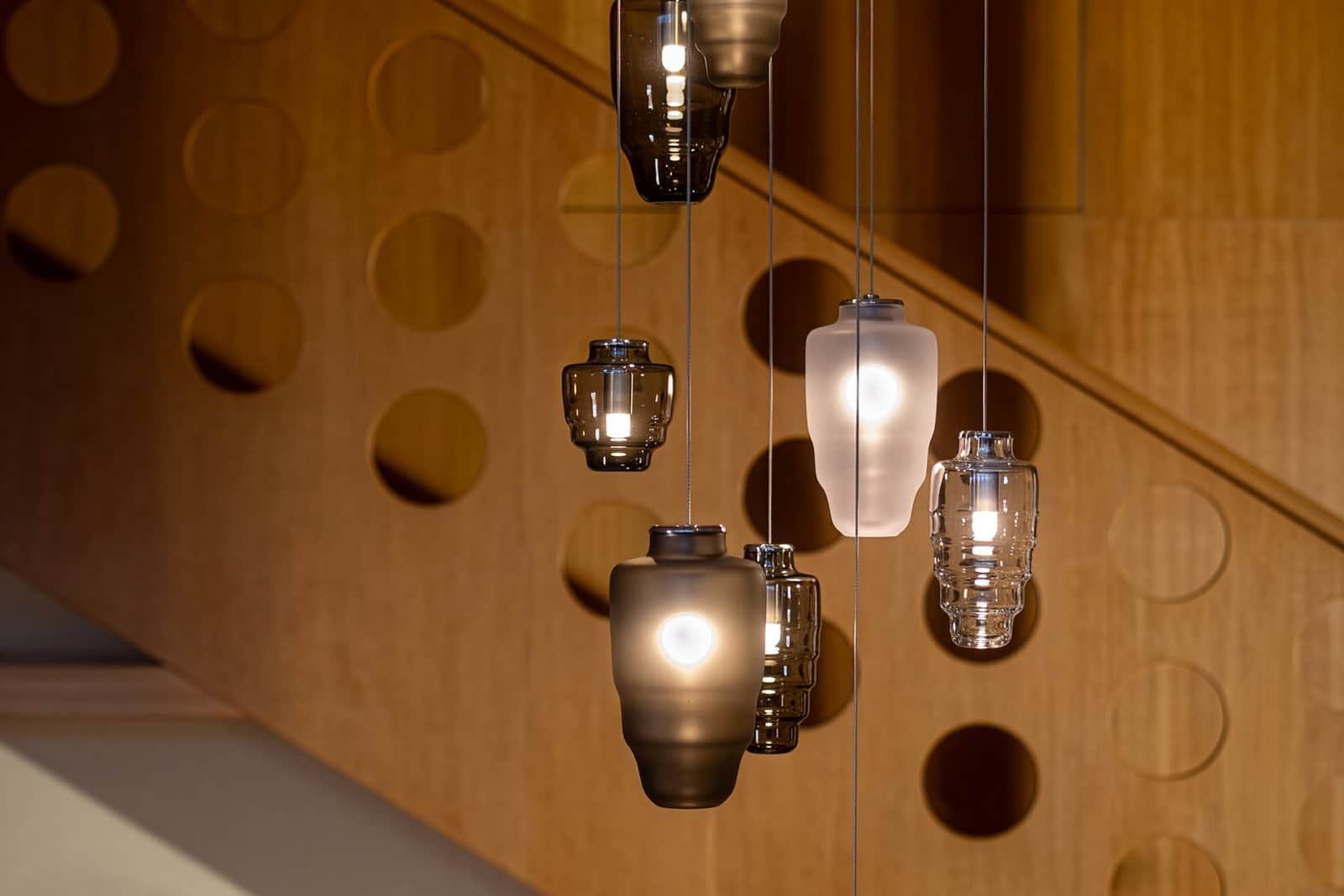
First and foremost, the owner must feel comfortable in it. I’ve always been guided by this, even when I was creating installations for Lasvit or the Swarovski brand. Personally, I prefer a minimalist interior, muted colours and minimal furniture, with plenty of plants. I like it when there are multiple light sources in an interior, because light is brilliant at defining individual functional zones.
What inspired you when designing the award itself?
First, I reflected on what an interior actually means to me. I realised that an interior isn’t just what’s inside; it’s surrounded by a façade, and beyond that lies the landscape. An interior also evokes warmth and light for me, and I tried to incorporate that into the design of the award. It consists of two pieces of glass. The upper part is crystal with an opal gradient. For me, this represents the surroundings – let’s say the landscape, or misty darkness, or perhaps a white haze. Because it’s handmade, the gradient (colour transition) is different on each piece, so none of the ten awards are exactly the same. The lower part, made of sandblasted glass, acts as a diffuser and symbolises the interior itself. I chose a warm-coloured light source for the interior, as this evokes a sense of cosiness and well-being for me. I also tried to incorporate a connection to fashion into the design, so the award is wrapped in leather straps and has a loop at the top. This effectively turns it into an accessory that can be carried around.
You are the designer of the medals for this year’s Ice Hockey World Championship, which is to be held in Prague. How difficult was it to convince the organisers that they would be made of glass rather than metal?
It wasn’t difficult. The Czech Ice Hockey Association sent out a brief which, alongside clear parameters such as size, weight, logos, text and so on, stated that the medals should reflect both ice hockey and the host country – the Czech Republic. I’m convinced that glass is a significant material for our country; Czech glass still has a great reputation worldwide. The similarity between glass and ice was so obvious that it became a clear choice for me. It’s important to note that this was an open competition, so the organisers were selecting from several designs, and I think they were enthusiastic about the use of glass, which is why they chose my design.
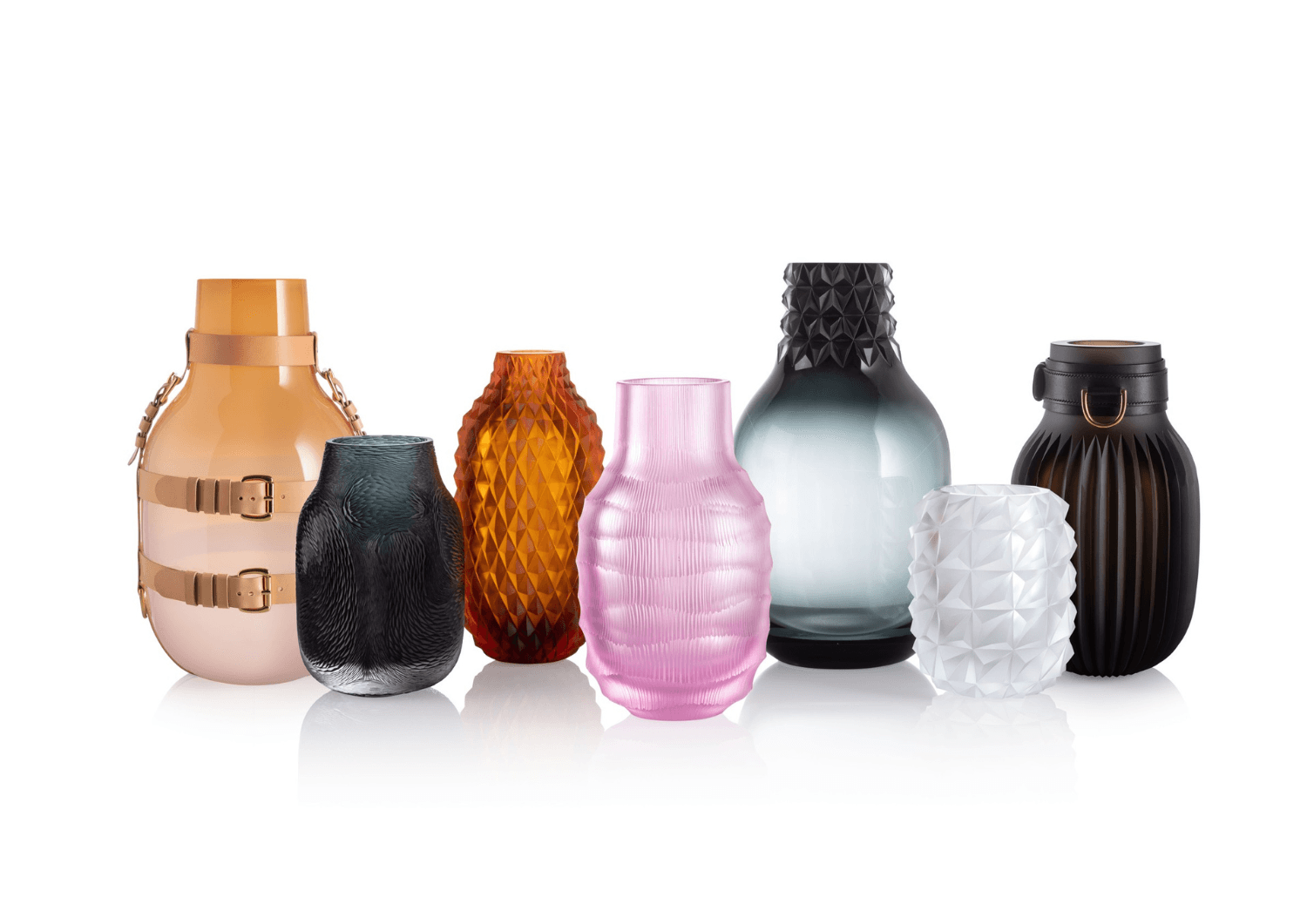 Vases from the Heroine collection. Photo: Kristina Hrabětová.
Do you have a connection to ice hockey?
I’ve been watching ice hockey since I was a child. I enjoy the speed, the masculine strength and the dynamism of the sport, so I’m really looking forward to going to watch a match during the Ice Hockey World Championship.
Your first collection of vases was dedicated to strong women. You yourself are a strong and successful woman. Does femininity always and in everything reflect in your style, or do you sometimes deliberately choose not to emphasise it?
I don’t refer to it primarily, but I am a woman, so most of my work reflects my view of the world. I’m also, as has already been mentioned, increasingly inspired by fashion. In my view, haute couture is a kind of mirror of what’s happening in society, and I try to convey that in my product design as well. I’d love it if we could manage to create designs that aren’t just beautiful or functional, or that don’t merely tell a personal story, but also serve as a social commentary.