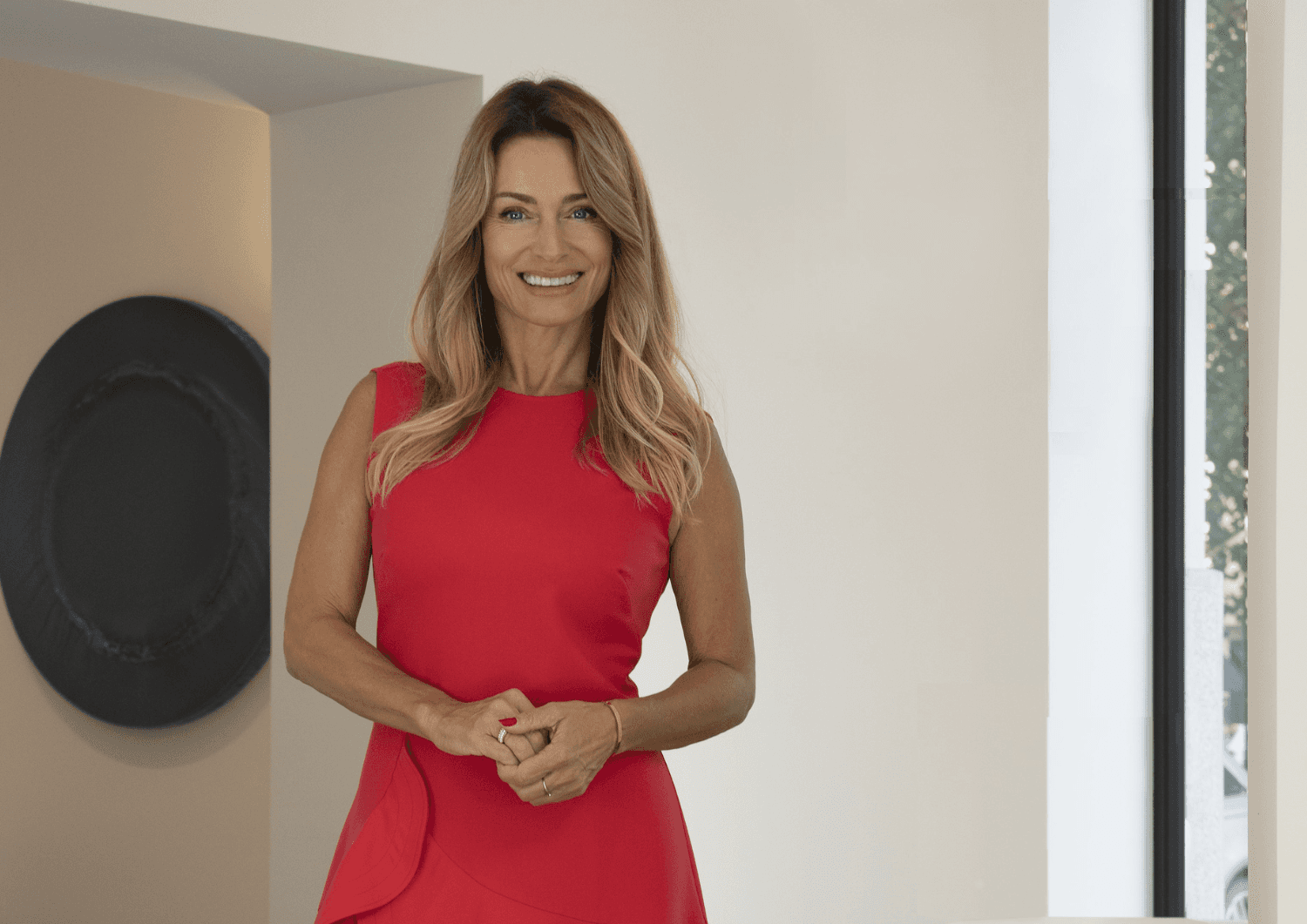
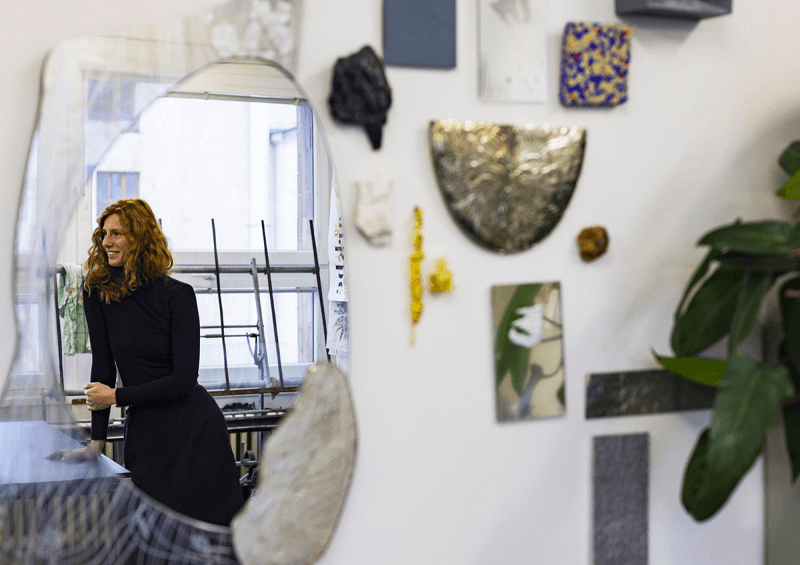
Eliška Monsportová in her studio in Prague’s Holešovice district. Photo: LEXXUS NORTON.
Where do you live right now, and how would you describe the style of your home’s interior?
Right now, I live in a beautiful, newly renovated apartment in a brick row house. I’d say it’s furnished in a simple and practical way, but it’s cozy.
How is it different from the home you grew up in?
It’s quite different, probably because there are far fewer things in it, which makes it feel very spacious.
What would your dream home look like?
My dream home would combine elements of the old and the new. It would be flooded with natural light. It would feel clean yet very cozy. It would have various nooks where the original structure interacts with new, thoughtfully chosen materials. It would be furnished with comfortable pieces, and the most important feature would be the view of the countryside.
In high school, you focused on ceramics, and at UMPRUM, you worked with glass. From a creator’s perspective, what do these two materials have in common, and how do they differ?
For me, glass is like an improved version of ceramics. Both materials have a similar composition, but each requires a different approach. With ceramics, you’re part of the entire process—from the first sketch, through the model and mold, to firing—the piece takes shape right under your hands. With glass, it’s different; more people are involved in the process, and it’s not always possible for the artist alone to carry out a given task. So you can commission a glass piece and then simply pick it up, or, like me, you can look for ways to get hands-on with the glass during the process and thus influence the result.
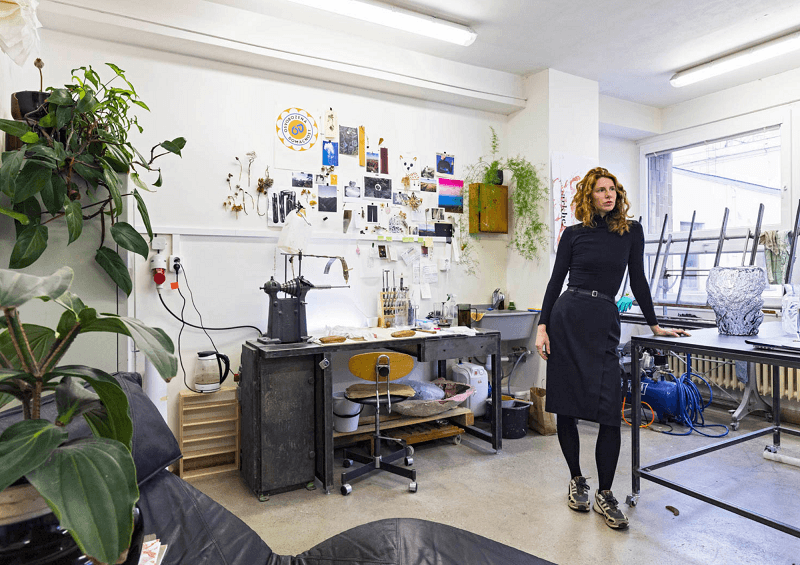
Eliška Monsportová in her studio in Prague’s Holešovice district. Photo: LEXXUS NORTON.
You studied in Rony Plesl’s studio. How did he influence you? What’s the most valuable lesson you learned from him?
Rony influenced me with his passion for art and craftsmanship. The most valuable lesson is probably that if you want to be good, you have to be world-class.
You started working while you were still a student. What were the advantages and disadvantages of that?
The advantage was that I already had a solid foundation after graduation, and in terms of work, not much changed for me. The disadvantage of working while I was in school was that I had little time for my studies themselves.
Your work is characterized by a certain connection to nature. Where do you most like to go for inspiration?
I prefer longer mountain hikes, which are more intense both visually and in terms of the experience.
What did your recent collaboration with the fashion brand Port of Stars entail? What was involved?
My role in this collaboration was labeled “Visual Guide.” I was responsible for naming the collection and embedding it within the story I saw in it. Part of my work involved the visual presentation of the story for social media and preparing the space where the collection was showcased. That space incorporated elements of my studio as well, which was meant to symbolically—and physically—connect our worlds.
The presentation also featured my glasswork and small jewelry pieces, whose earthier colors complement the designs of the Elements collection.
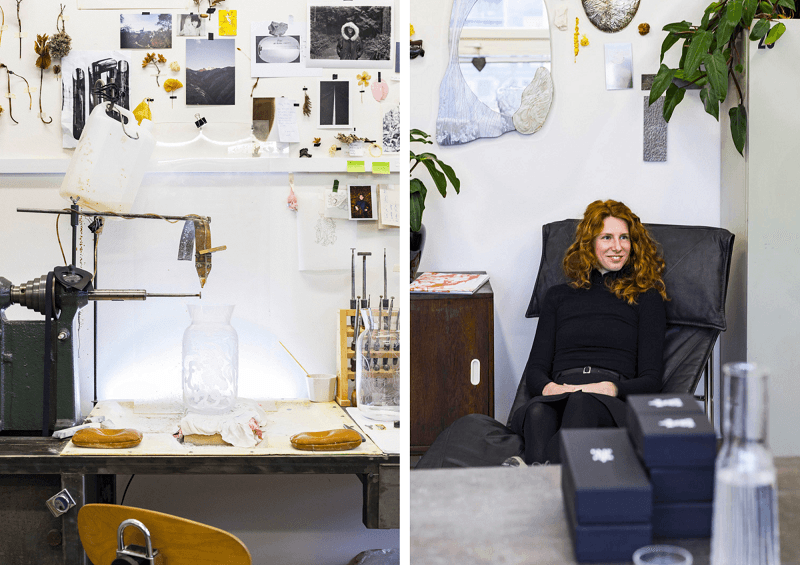
Left: Here, Eliška creates her signature engravings. Right: Eliška Monsportová in her studio. Photo: LEXXUS NORTON.
A significant portion of your work could be described as interior accessories or objects—whether they’re the Above mirrors, diffusers for Scent Roche, or candleholders for Apis Candela. Do you design them with a specific space in mind where they’ll be placed?
I design and craft objects so that they’ll fit almost anywhere. I try to make them stand-alone pieces—accessories that can be a bit more dominant, but at the same time can be easily combined or coordinated with other accessories in the space.
To what extent do the brands you work with influence your design process?
Very little in terms of the design itself; rather, I always receive some kind of vision, a feeling, and basic technical requirements from them, if any.
Do you also collaborate directly with architects?
Not yet, but it’s a topic I’ve been focusing on a lot lately.
Which designers and architects do you find inspiring, and why?
I like the furniture by Jiří Krejčiřík, who, in my opinion, plays with shapes, materials, and historicism in a fun way. I also enjoy the work of the duo Lexová & Smetana and their latest armchair designs for the Polstrin brand. Among architects, I’d mention the Abtsmolen studio and Lenka Míková; I appreciate the sophistication, thoughtfulness, choice of materials, and sensitive approach to both the surroundings and the building itself in their work.
What was the last thing you bought for your apartment or house?
A futon for sleeping.
What’s your guilty pleasure at home?
Candles from Apis Candely and incense sticks I brought back from Canada.
Eliška Monsportová
A Czech designer, engraver, and artist working under the brand name Elis Monsport, she has focused primarily on working with glass in recent years.
She studied ceramic design at the Secondary School of Fine Arts in Ostrava, and later focused on glass design at the Rony Plesl studio at UMPRUM. Among other things, she has collaborated with brands such as Port of Stars, Scent Roche, Apis Candela, Artisème, and 27ascent. You can follow Eliška’s work on Instagram or her official website.